Sept 9 H-1B/L-1 Fee Rise, Office-Return Compliance Risks, “Please” & “ASAP” Reduce Efficiency
by KCALHR_Blogs
H‑1B/L‑1 extension fees change Sept 9 — which firms should prepare in advance? If employees refuse in‑person talks after dismissal decisions, can companies fire directly? Common phrases like “please” and “ASAP” may lower efficiency; This report delivers a comprehensive evaluation.
H‑1B and L‑1 Extension Fee Changes Take Effect Sept 9th. Which Companies Must Prepare in Advance?
First, let’s examine the new H‑1B/L‑1 extension fee regulation. (opens in new tab) On Aug 10, the U.S. Department of Homeland Security (DHS) issued its final regulation expanding the “9/11 Response and Biometric Entry‑Exit Fee.” The rule takes effect Sept 9, 2026.
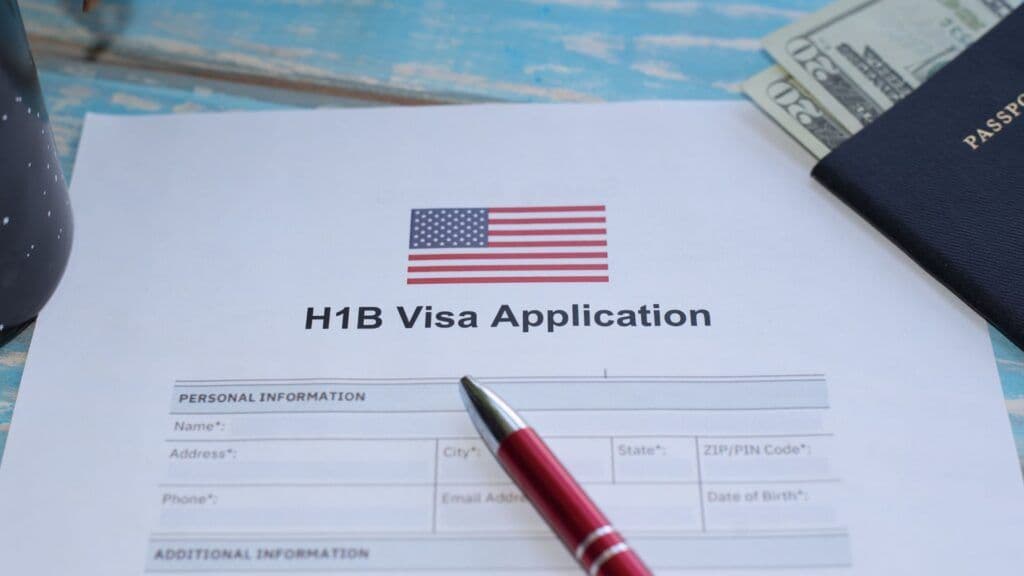
The new regulation requires eligible employers to pay fees when filing H‑1B and L‑1 extensions. In the past, these fees were typically charged only for initial applications or employer transfers.
It applies to U.S. companies with 50 or more staff, where the majority are on H‑1B or L‑1 visas. The fee is $4,000 for each H‑1B extension and $4,500 for each L‑1 extension.
The rule does not apply retroactively. Petitions filed before Sept 9 avoid the extra cost. Attorneys emphasize that H‑1B extensions may be submitted six months in advance, giving businesses the chance to reduce expenses with early planning.
To ease your management burden, KCAL Insurance offers professional support. Click below to schedule a free 30‑minute legal consultation or receive a complimentary labor law poster, let us help you build a more compliant workplace.
California Employers: How to Legally Terminate and Settle Wages When an Employee Refuses to Answer Calls or Show Up?
Next, we examine a workplace case. While suspended, the employee declined phone calls and insisted on texting, even as the company had finalized termination and readied final pay. How should the employer complete the process in compliance? The California Chamber of Commerce’s labor law specialists provide four key suggestions.

1.Termination Communication. Employers who usually meet in person may instead use voicemail, text, or email to inform the employee of the meeting details and require attendance.
2.Reporting Time Pay. When the employee appears but works less than half a regular day, the employer must pay between 2 and 4 hours of reporting wages. Suspended employees attending only for the meeting must receive both meeting pay and reporting pay (e.g., a 30‑minute meeting requires 2 hours of pay).
3.Final Wage Payment. All final wages, including salary and unused vacation, must be paid at the time of termination. Late payment triggers a daily penalty equal to one day’s wages, capped at 30 days.
4.Employee Refusal to Attend. If the employee will not appear, employers may mail the termination notice, related documents, and final wages. The employee’s location is treated as the separation site, and wages must accompany the notice. Any required exit tasks under employer control count as compensable hours and must be included in final pay.
Saying “Please” and “ASAP” May Lower Efficiency: How Teams Can Strengthen Execution
Finally, we examine research on how subtle aspects of management communication influence task completion. Project management platform Chaser analyzed nearly 300,000 Slack tasks over two years (opens in new tab) and reached some counterintuitive conclusions.

The data reveal that tasks phrased with “please” had a 61.8% on‑time completion rate; those labeled “ASAP” or with multiple exclamation marks reached 62.3%; while neutral, direct requests achieved 68.6%. This indicates that being overly polite or overly urgent may lower timely delivery by roughly 10%.
Researchers also observed that assigning clear responsibility boosts performance. Tasks given to one person were 66.8% more likely to be finished on time than those shared by two. When employees voluntarily accepted tasks, the completion rate rose to 70.9%.
Further findings show that tasks posted in shared channels were 44% more likely to be completed on time than those sent privately. Tasks without deadlines were 2.5 times more likely to remain incomplete compared to those with deadlines. Morning requests were 32% more likely to be completed than afternoon ones.
For business leaders and managers, this research offers an important reminder: rather than focusing too heavily on whether a request sounds sufficiently polite or urgent, it may be more effective to clearly assign a single person responsible, establish a specific deadline, communicate tasks through transparent and visible channels, and carefully consider when task requests are sent.
KCAL HR Weekly: Brings you the latest insights on U.S. business operations and talent management.
All in just five minutes.
This article is intended for general informational purposes only and should not be considered legal, tax, or accounting advice. Readers are encouraged to seek professional guidance for advice tailored to their specific circumstances. Click here to schedule a complimentary corporate legal consultation.