Turning 65 or Over 65?

What Changes Are Coming to Medicare in 2026?
Starting in 2026, Medicare will undergo three major changes, affecting seniors’ premiums and benefits:
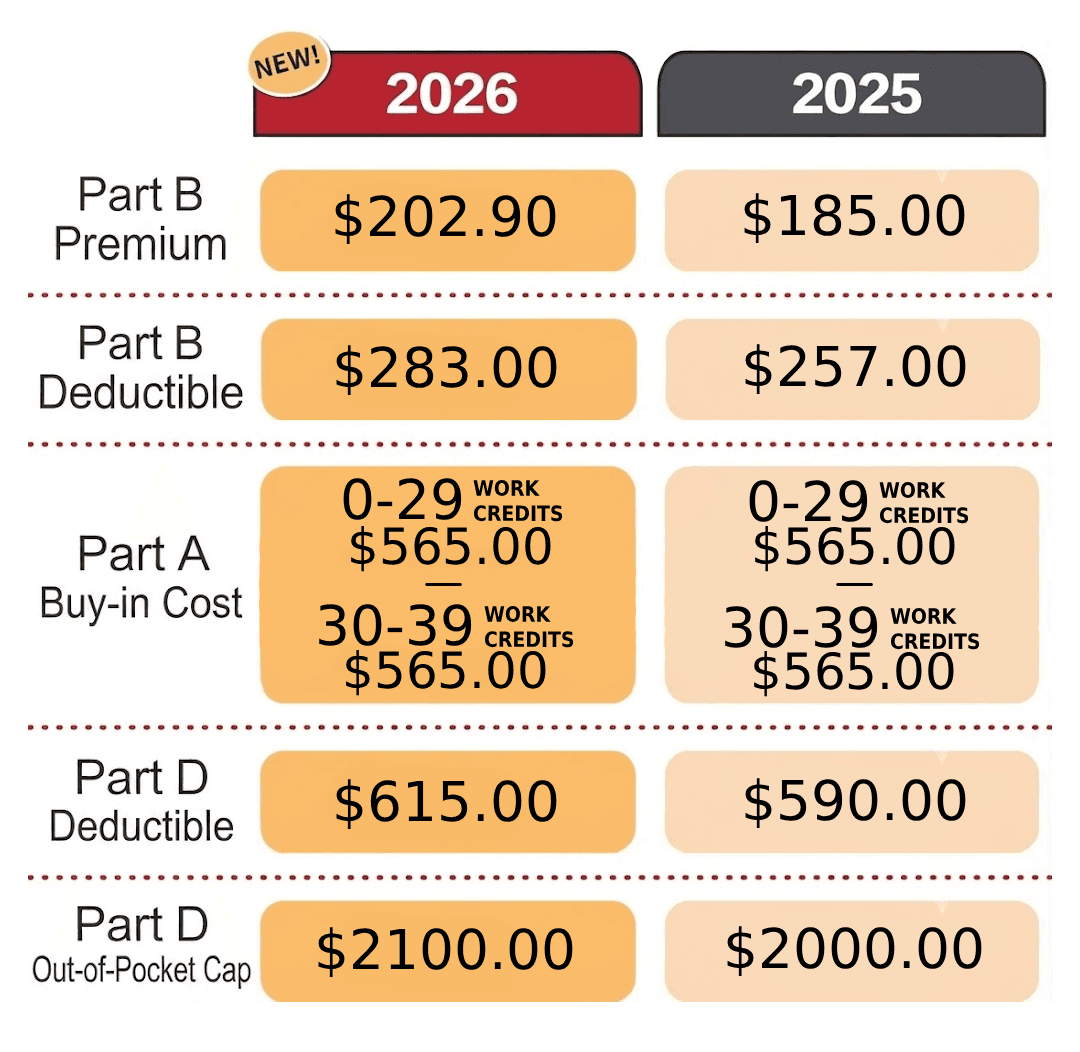
Change 1: Part B Premiums May Exceed $200
According to multiple mainstream media and policy analysts, the standard Medicare Part B monthly premium could rise from $185 in 2025 to approximately $206.50 in 2026—a jump of over 11.6%. This significant increase will place a heavier financial burden on seniors, making it crucial to plan ahead.
Change 2: Insurance Market Reshuffling and Benefit Reductions
Some insurance companies may withdraw certain plans from specific regions or reduce benefits such as dental coverage, transportation assistance, or OTC allowances. Seniors should carefully review whether their current plan will still meet their healthcare needs in 2026.
Change 3: Medi-Cal Asset Review May Return
Currently, Medi-Cal program determines eligibility based on income alone, without considering assets. However, in 2026, the state may reinstate asset review. In other words, the “no asset check” period may come to an end. If Medi-Cal eligibility is affected, your current Medicare plan may also need to be reassessed.
What is Medicare?
As you approach retirement, have you made plans to protect your health in this new chapter of life? The U.S. government provides a dedicated health insurance program — Medicare for people aged 65 and over, as well as for certain individuals with disabilities or serious illnesses. KCAL Insurance would like to remind you that each year, from October 15 to December 7, is the brief Medicare Annual Enrollment Period. During this time, seniors can add, cancel, or switch their current health insurance plans. Our experienced Medicare consultants at KCAL Insurance are here to provide you with the most professional advice, the best prices, and the most comprehensive coverage.
You may be eligible to apply for Medicare if you meet the following conditions:
- You are a U.S. citizen or a green card holder who has lived in the U.S. for at least five years.
- You are 65 years of age or older, or meet eligibility due to disability or certain serious illnesses.
You must apply for Medicare at your local Social Security office or online (online application portal (opens in new tab)) during the three months leading up to your 65th birthday.
Our Products
When you become eligible for Medicare, you are automatically entitled to Part A (hospitalization) and Part B (outpatient services) benefits upon enrollment. However, Medicare only covers 80% of medical expenses. The remaining 20% requires the help of a professional health insurance consultant, who can recommend additional benefit packages tailored to your financial situation and health needs — ensuring that high medical costs won’t become a burden in your retirement years.
Offered by private health insurance companies, this plan supplements the coverage not provided by original Medicare. It combines Part A hospital and Part B outpatient benefits, and offers extra benefits such as dental, vision, and hearing coverage, as well as prescription drug coverage. For HMO plans, members must choose a primary care physician and receive medical services within a designated provider network. The plan also includes prescription drug benefits. A referral from a primary care physician is required to see specialists.
Also offered by private health insurance companies, this plan supplements original Medicare coverage. It combines Part A hospital and Part B outpatient benefits, with additional benefits like dental, vision, hearing, and prescription drug coverage. PPO plan members are not required to choose a primary care physician or stay within a provider network. They can visit both in-network and out-of-network doctors and hospitals without a referral.
Private health insurance companies offer these plans to fill in the gaps left by original Medicare coverage. There are no network restrictions, and usage is not limited by county or state.
Private health insurance companies offer plans that help cover the cost of prescription drugs. Different plans provide various levels of drug coverage and co-payment rules, depending on the drug tier and plan design.
Compare Your Medicare Options
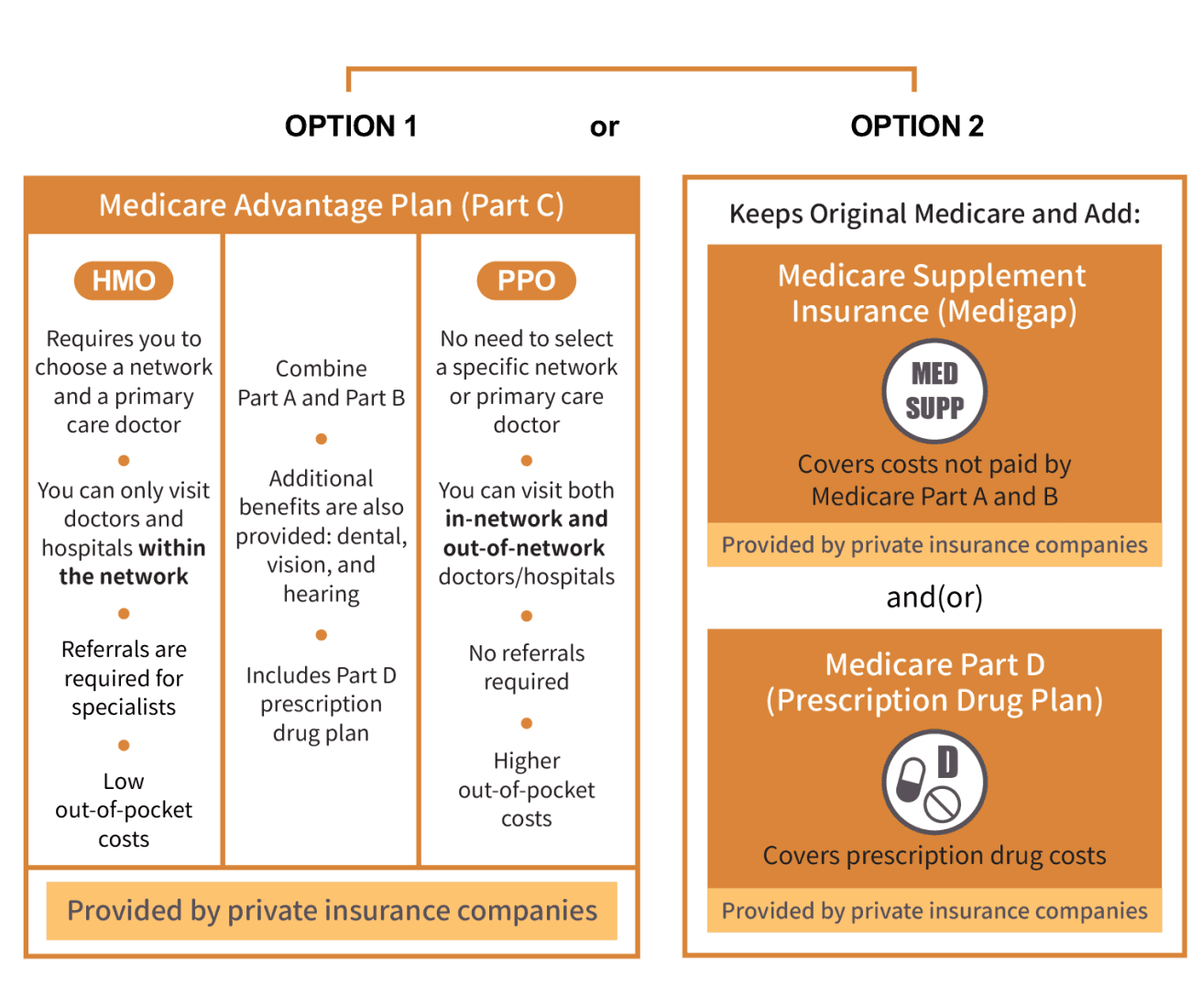
Option 1: Medicare Advantage Plan (Part C)
Medicare Advantage plans are offered by private insurance companies and combine your Medicare Part A and Part B coverage. Many plans may also include extra benefits such as dental, vision, hearing, and prescription drug coverage.
- Requires you to choose a primary care doctor and use a specific provider network.
- Generally only covers care from in-network doctors and hospitals, except in emergencies.
- Referrals are usually required to see specialists.
- Often has lower out-of-pocket costs compared to other plan types.
- May combine HMO-style coordinated care with some out-of-network flexibility.
- Allows you to see certain providers outside the network, usually at a higher cost.
- Can offer a balance between structure and flexibility.
- Still managed by a private insurance company under Medicare rules.
- Does not require you to choose a primary care doctor.
- Lets you see both in-network and out-of-network providers.
- Referrals are generally not required for specialists.
- Typically higher premiums or out-of-pocket costs than HMO plans.
Option 2: Keep Original Medicare and Add Coverage
With this option, you keep Original Medicare (Part A and Part B) and add private coverage to help with out-of-pocket costs and prescription drugs.
- Helps pay some costs not covered by Medicare Part A and Part B, such as deductibles, copays, and coinsurance.
- Can reduce your out-of-pocket expenses when you use Medicare-covered services.
- Policies are standardized by plan letter, but premiums vary by insurer.
- Offered by private insurance companies.
- Helps cover the cost of prescription drugs.
- Each plan has its own formulary (list of covered drugs) and pharmacy network.
- Premiums, copays, and coinsurance vary by plan and medication tier.
- Offered by private insurance companies approved by Medicare.
When can I apply for Medicare?
Initial Enrollment Period:When you turn 65 or become eligible for Medicare due to other reasons, you can use your initial enrollment period. Your initial enrollment period starts three months before your 65th birthday month, includes your birthday month, and ends three months after your birthday month (a total of seven months).

Annual Enrollment Period:From October 15 to December 7 each year, you can add, cancel, or switch Medicare plans.
Special Enrollment Period:In certain special situations, you may qualify for a special enrollment period. For example, if you retire and lose employer coverage, are diagnosed with certain qualifying disabilities or chronic illnesses, receive assistance from the state government, or move out of your plan’s service area.
We’ve Selected the Top Insurance Carriers for You














More Exciting Videos for Seniors
Disclaimer: Other Provider groups are available in the network. We do not offer every plan available in your area. Currently we represent 17 organizations which offer 100+ products in your area. Please contact Medicare.gov, 1-800-MEDICARE, or your local State Health Insurance Program to get information on all of your options.